Kai Raine

Author of These Lies That Live Between Us

Menu
  • About Kai
  • Books
    • These Lies That Live Between Us
  • Short Fiction
  • Non-Fiction
  • Media & Events
    • Contact Me
  • Blog
  • 日本語
  • Reviews & Interviews
Menu

Category: Keeping Ahead of the Shadows

Isobel’s Quandary

Posted on November 29, 2018November 29, 2018 by Kai Raine

My mother and I used to read a lot of Eva Ibbotson romances.

And by “a lot,” I mean “all of them.” It was my mother who started giving me straight-up romances, instead of my usual fantasy or mystery novels with romantic subplots. She tried this several times—I don’t know if it’s because she liked romances, or because she thought I seemed to get the most out of those romantic subplots. I suppose we’ll never know, since I never thought to ask.

Whatever her motive, she tried several times—and most times, those attempts failed miserably. She first introduced me to romance novels when I was about eleven or twelve. These were novels like teen romance movies from the ’80s, revolving around high school and cliques and peer pressure, and that one perfect boy who comes and turns the main character’s life upside down.

I wasn’t yet at the point where I could form the opinion of “disliking” a book. I don’t remember having any particular negative feelings. I merely didn’t feel like reading more things like that. I do remember not understanding why there were weird initiation rituals to cliques, and wondering why in the world anyone would bother.

I was fifteen or sixteen when my mother finally found my sweet spot: that sweet spot was Eva Ibbotson.

I’d already read and loved Journey to the River Sea, Which Witch, The Secret of Platform 13, and other such stories. One day, my mother handed me The Countess Below Stairs. I took one look at the author name and started reading.

I was hooked. I was weirdly into Russia at the time, and the historical fiction with an aggressively tame, G-rated romance was right up my alley. The countess-turned-servant angle was also pretty fun. Somehow, that book managed to push all my buttons: it gave me angst without getting dark; deep, world-rocking emotion without getting wordy or descriptive about it; and a main character whose misfortune didn’t bring her down, who seemed to go around making other people’s lives just a little bit brighter.

I have to say, I think that part of the appeal of Eva Ibbotson romances are that they aren’t merely romances. The two main characters overcoming the obstacles that keep them from being together when they first meet—that’s just the frosting on the cake that is these stories. The cake is the sheer richness of story, full of side characters with little stories in their everyday lives.

In the case of The Countess Below Stairs, it’s in the neighbors, the staff, and both families. These books are populated with characters with joys and sorrows and dreams and hopes and fears, and Ibbotson weaves them all together into a stunning tapestry that always leaves me looking at the world around me and feeling it a little brighter.

I bring this up because recently, I’ve been thinking of A Company of Swans. This is the story of Harriet, the abused daughter of a misogynistic professor, who runs away from home (and, indeed, England) to be a dancer with a ballet company that goes to Brazil. Here she meets Rom, the second son of an English noble who left home in a rage after the love of his life, Isobel, was offered a choice between Rom with his love or Rom’s brother with his title and money—and Isobel chose the latter.

My mother and I used to talk about this book, once upon a time. I was young, and the uncaring, status-obsessed Isobel didn’t seem worth much thought. She was a villain, for the purposes of the story. Obviously Rom had been mistaken in her character, I thought.

My mother disagreed. She reflected that the choice Isobel made—choosing status over love—must have changed her, because she would have had to live with that choice afterwards.

Years later, upon rereading the book, I was surprised that I’d ever thought of Isobel as a villain. She’s uncaring towards her son and clearly pursuing Rom at Harriet’s expense. Yet Rom himself points out in the text—he can only pity her. I find that I pity her, too.

Of course, there’s no way to know how Eva Ibbotson intended Isobel to be read, but as a believer of the school of thought known as Death of the Author, I don’t really think it matters. I like my mother’s interpretation, because I believe that that is a true phenomenon. We make choices that we tell ourselves are practical, because they offer us what we think is supposed to make life happier, or easier; but in reality, we’re giving up something else that we’d never have given up, had we known how much of ourselves we would lose in the process.

It’s easy to look down on Isobel, I think, because we’re indoctrinated on Hollywood and Disney movies telling us to Follow Your Heart, and that True Love is the answer. It may be easy to see why giving up your true love for his brother’s status and money would cut this woman to the soul and change her fundamentally, for the worse. But despite—or maybe because of—that, I think Isobel is a beautiful lesson hidden in plain sight.

I think of Isobel a lot, these days. I say I pity her, but I don’t mean it in a condescending way, if that’s at all believable.

I have a low-paying part-time job, and have been accepted for a second part-time job starting next year. But I’m already experiencing weeks when my body simply can’t keep up with the one job plus research, plus all the other random things I decide I want to do (reading, volunteering, going out with friends, writing).

So I applied for a scholarship through my university, and they recommended me for one, which I then proceeded to fill out and complete the application.

It weighs on my mind, now. This scholarship would be from a tobacco company. The money would be good—enough to live on 2/3 and have 1/3 left over for fun, or savings. When I completed the application, I was in the mindset of, “Well, a scholarship is a scholarship.”

I spent half of this month living on meager paycheck to meager paycheck, and it was rough. So I saw the opportunity for an end to this, and I leapt at the thought.

But ever since, I’ve felt the weight of it on my mind, darkening me. I’ve found myself thinking of Isobel.

It’s practical. But if I get accepted (because I haven’t been yet, thank goodness), and I take it, what is the true cost going to be? In a physical sense, it would make life easier; but for my mind? I feel like it would cloud me up again. All the junk in my mind I’ve cleared away, the little bit of clarity I feel like I’ve finally been arriving at in this last year, or half a year—what was all that for, if I’m just going to take a scholarship from a company that I know I don’t like? Who’s actively pushing tobacco into international markets?

After all this time, sorting through all the little things that have clouded my mind and made me more a product of my environment than anything truly me—what kind of idiot am I that I think that I can accept something like this in the name of ease and time and think it won’t affect me in any bigger ways? That it can just be a paycheck and an occasional gala-type event that I have to attend? When has that type of logic ever truly worked for me? (Never. I can’t remember a single instance where it didn’t come back to haunt me.)

Practicality is only one part of the puzzle—a big part, yes, but I think I’d rather deal with the impractical solution that leaves me without such a weight on my conscience.

EDIT: I don’t think that Isobel necessarily would have been happier had she married Rom. Clearly, a penniless suitor wasn’t something that appealed to her, regardless of how much love there was between them. I do think that even if she had made that choice, they would most likely have grown apart in time and become unhappy—maybe Rom would have gone on to meet Harriet, fall for her and have an affair with her anyway, and she really would have become his mistress, just as she was convinced that was the most she could ever hope for in the story itself.

I don’t think Isobel’s mistake was not marrying Rom. I think her mistake was marrying Rom’s brother. And those are not the same thing, to me. But I also recognize that in reality, that’s probably the hardest choice to make of all. Stuck between the choice your heart yearns for and the choice your mind yearns for, saying “I pick neither” is probably the hardest thing in the world, and itself carries the risk that then you’re searching for some impossibly perfect thing to justify what you gave up for some reason you probably can’t even articulate.

Just so we’re clear.
Share this page:

  • Print (Opens in new window) Print
  • Email a link to a friend (Opens in new window) Email
  • Share on Facebook (Opens in new window) Facebook
  • Share on X (Opens in new window) X
  • Share on Tumblr (Opens in new window) Tumblr
  • Share on WhatsApp (Opens in new window) WhatsApp
  • Share on Reddit (Opens in new window) Reddit
  • Share on Pinterest (Opens in new window) Pinterest
  • Share on LinkedIn (Opens in new window) LinkedIn
  • Share on Telegram (Opens in new window) Telegram

Like this:

Like Loading...

The Irresistible Lure of Failure

Posted on November 22, 2018 by Kai Raine

Have you ever heard of the secretive, bizarre 60-hour over-100-mile race that has only been completed by 15 runners since it began 30 years ago?

If you answered no, we’re in the same boat. I’d never heard of the Barkley Marathons until this week.

When I’m tired, I often watch the Today I Found Out YouTube channel. Earlier this week, I stumbled across this video when YouTube recommended it to me.

If you don’t have the time to watch an 18-minute video, here’s the TL;DW (“too long; didn’t watch”, or a brief summation of the video): Barkley is a race that is deliberately designed to be unbeatable. From the secretive application process to the course that gets harder every time someone manages to finish, the whole thing is designed to be an Experience in Failure.

And from the moment that I watched that first YouTube video, I have been utterly hooked. It’s funny, in a way, because while I do run sometimes as a means to an end (i.e. exercise), it’s never been something I enjoy. I’m happy when I can run 5km continuously; never in a million years have I considered running a marathon, let alone one that’s 160km in the mountains.

But that’s not the point.

This race, to me, isn’t about the running. No—instead, it’s the stuff of dreams: pushing yourself to the limit for a near-impossible goal, with no reward on the horizon beyond the ability to say “I did it.”

Isn’t it glorious?

I’ve watched footage of the race taken by runners, an absolutely spectacular documentary about Gary Robbins’ attempt to complete the race, and a multitude of other sources about the race.

It brings me such joy, this race.

We as a society can be so insecure when it comes to failure.

Whether it be the validity of our own opinions, little inevitable mistakes born of carelessness or inexperience, arbitrary goals that we set for ourselves, or a wide range of other things, we can become embarrassed or ashamed in the moment or even just reliving the memory. Sometimes, we even lie or obfuscate to hide these little things.

But why?

Failure is a wondrous thing. For years, The Incomplete Book of Failures by Stephen Pile has been a staple gift item of mine. It may be out of print, but it is such a wonderful book to have around so that one can have a good laugh from time to time.

But that’s always been insufficient in and of itself, of course, because that book is more about laughing at other people’s failures than about being secure about our own.

It’s more than that, I realized recently as I read The Story of Jiro by Kojin Shimomura. This is a story of an unfortunately “monkey-faced” second son of a well-off family growing up and learning about life and the people around him. It reminded me somewhat of Anne of Green Gables, both stories being episodic stories of a particular child that expanded gradually into that character’s lifetime in stories.

The Story of Jiro and the Danger of Praise

One of Jiro’s childhood struggles is his insecurity about his position in the eyes of the adults in his family. Because Jiro’s mother was unable to produce enough milk, Jiro was raised in his early years by a wet nurse; consequently, even after he is reclaimed by his birth parents, he grows up perceiving his wet nurse as his main mother figure. Between Jiro’s paternal grandmother’s overt favoritism for both of his brothers over Jiro, and his own internal conviction that his own mother neither wants nor loves him due to poor communication between the two, Jiro finds refuge in the male adults in his family: his father and maternal grandfather. At first very rebellious, Jiro settles down after a series of events culminating in a meaningful discussion with his grandfather.

After a time during which Jiro takes care to behave himself well, including several Very Good Deeds, he is praised by everyone in his family—save his grandfather. Jiro becomes increasingly convinced that he has been shunned by his grandfather, and is just about to lash out—when his grandfather acknowledges that Jiro has done a Very Good Thing.

Jiro is at a loss at this. If his grandfather has always been on his side, then why hasn’t he been praising Jiro along with all the other adults?

His grandfather tells him a story, then, about a young Buddhist disciple. All the young disciples are trained in reciting the sutras, but most of them do so going through the motions, only memorizing the words. This disciple, however, is different. He takes the time to meditate on the meanings; to ask the monks about what he doesn’t understand, and meditate upon their answers. Because he takes the time to understand, when he recites the sutras, it is a beautiful thing to hear.

One day, a group of visiting monks arrive, and this young disciple recites the sutras for them in a ceremony. The monks are duly impressed, and tell the disciple that they have never heard those sutras recited so wonderfully. Their praise is lavish, and the disciple is utterly delighted.

And from then on, whenever he starts to recite the sutras, what comes to mind is not the meanings of the sutras, but instead the delight he felt at being praised for reciting so well. The brilliance of his recitation fades away, until they ring dull and hollow.

At last, the boy goes to the monk presiding over his temple and asks for permission to go into the woods to train alone.

“Why do you want to do that?” asks the monk.

“I can’t focus my mind,” the disciple laments. “Ever since those visiting monks praised my recitations, my head’s been turned. I am still utterly immature.”

The monk considers the disciple solemnly. “You are wise,” he says to the boy. “For where many focus on the way that a scolding disturbs the mind, words of praise are far more dangerous—but there are few who ever notice.”

Jiro’s grandfather finishes the story, and asks Jiro if he understands. Jiro does.

I felt like I was there with Jiro, a child being enlightened on something so simple—something that I almost feel like I remember hearing as a child and then forgetting because I, unlike Jiro, didn’t understand its significance.

The Gift of Failure

I’ve been learning to practice radical self-acceptance—this is my therapist’s school of thought. In learning this, failures and mistakes have been the greatest gift.

I grew up beating myself up for every failure; recounting and reliving failures hours or days or months or years past again and again. Somehow, there was a part of me that thought that failure=bad and therefore I must punish myself.

But that’s not true, I’m finally learning. Failures are utterly valuable—I can learn from them, and not just in a don’t-do-this-again sense.

It’s in learning to apologize and change my behavior without letting shame disrupt my mind. It’s in accepting that in conversations where miscommunications prevail, I don’t have to keep talking, trying to clarify as if the misunderstanding is tantamount to a lie. It’s in accepting that I can tell people things about uncertain thoughts of the future without throwing the mantle of “unreliable” over myself when I ultimately don’t choose to do what I said I would. It’s in accepting the flaws of my mind and action as things that are, indeed, flaws, but are simply a part of me and nothing to be ashamed of.

There was a part of me that always thought that if I stopped beating myself up for each and every failure, I’d lose the ability to learn from each failure.

But that’s not what’s happened.

Instead, I’m only more clear-minded: “I didn’t like how I said that. Oh well. Next time.” And often, I do change. Maybe not immediately, but gradually and surely.

And I can do these, because they are failures. Praise and success are, as Jiro’s grandfather’s story portrayed, harder to recover from. I had no words for it before I read that book. Praise sometimes paralyzes me as I fear squandering the good will I’ve somehow built up. Other times, success makes me lazy until I am failing once again and must fight my way back up.

Circling Back to Barkley…

Is this why the idea of a failure-guaranteed race so appeals to me? Maybe. I can’t say for sure. All I know is that I love the idea of Barkley.

Something contestants are almost guaranteed to fail. But they try it anyway. They wish each other five loops with grins. They push themselves and push themselves, and many try again and again.

It’s a bizarre little event.

And I love the idea of it.

Share this page:

  • Print (Opens in new window) Print
  • Email a link to a friend (Opens in new window) Email
  • Share on Facebook (Opens in new window) Facebook
  • Share on X (Opens in new window) X
  • Share on Tumblr (Opens in new window) Tumblr
  • Share on WhatsApp (Opens in new window) WhatsApp
  • Share on Reddit (Opens in new window) Reddit
  • Share on Pinterest (Opens in new window) Pinterest
  • Share on LinkedIn (Opens in new window) LinkedIn
  • Share on Telegram (Opens in new window) Telegram

Like this:

Like Loading...

Variable Comforts

Posted on October 16, 2018October 16, 2018 by Kai Raine

A Talk about “Writing Diverse Characters”

I gave a talk at the Japan Writers Conference about writing diverse characters. Like I said in my post leading up to the conference, I chose to go in with practically no preparation. I ended up so tense that I foolishly rehearsed talking about certain things—and those things were, predictably, the things I ended up wanting to talk about. I wanted to not prepare to avoid biasing myself in favor of certain topics, you see—but by rehearsing some things and not everything (which is of course impossible, since I couldn’t have known going in what people would want me to talk about), I biased myself in favor of talking about those things. For better or for worse.

Considering how much it stressed me out to try that format, and how I basically failed at my goal of giving a talk unbiased by my own preferences of topic, I was a little surprised that so many people seemed happy with the outcome.

The idea was that by asking people to introduce themselves early on, they would have a sense of which of each other to turn to, and I could also tailor what I talked about to what I thought it would help people to hear.

There are things I would do differently if I chose to do it again. But considering I felt like I had no idea what I was doing going in, I think it went pretty well!

There’s one thing I didn’t get to that I regret: talking a little about bias. I said that I operate by trying to understand my own biases, and the way that I think, and trying to balance that out. (Edit: I do intend to make a less personal post eventually, with links to more resources! This is not that, though if you follow the links below, some do lead to resources that may end up referenced in that post, as well.)

It’s a simplistic explanation of a complicated subject, so I’m going to write a post, now, explaining some facet of my mindset.

Discomfort in Comfort

The bottom line of what I’m about to describe is simple: I’m not comfortable being comfortable.

In essence, I suppose I try as much as possible to be aware that I’m only 1 of 8,000,000,000. I’m nearly nothing; and in fact, I aspire to be nothing—to be a blank canvas on which any story can write itself.

Obviously, that’s impossible. Complete absence of personality and preference and bias is probably unhealthy. Probably, everybody has a degree to which they’re comfortable leaving their own skin in their minds; a point beyond which things start to feel wrong.

I can’t speak for anyone else, but I live in a state where almost everything feels just a little bit “wrong”. I don’t know if it’s a factor of how I grew up—always an outsider, always the Other. I don’t know if it’s because of the mind games my cognitive scientist father played with me as a child—teaching me to exercise my imagination. I don’t know if it’s a predisposition, or PTSD, or maybe even a benign temporary state that I will grow out of.

Whatever the case, nothing makes me more uncomfortable than feeling like people are trying to accept me into their “group”. It’s not that I don’t want to be in a group; it’s not even that I don’t join the group.

But I am conscious of the group thinking; of any points where it becomes us vs them; of the ways that I adapt to the group. I’m also always conscious that the very same process that brings us closer together is also driving us further away from the rest of the world.

From a more selfish perspective, I’m also aware of the fact that the group might, at some point, decide—with good reasons that my mind can easily produce—that I don’t really belong.

Flexible Opinions

Opinions, to me, are just things in a box that I carry around. Sure, there are some that I’m more attached to than others, but I see them as tools in the constant search for better ones. So I’m that annoying person who, when surrounded by people all echoing the same opinion, will ask for an explanation from another viewpoint in order to see how this opinion is expanded and defended.

I have been conscious of and highly suspicious of my “brain holes” as well as everyone else’s, to the extent that I start to simply set myself at opinions opposed to whatever I’m reading or whomever I’m talking to, if the person or writing seems too ingrained in one particular perspective. If I catch myself thinking, “This just sounds right,” I immediately go looking for data to disprove it—or, if I don’t have time for that, just find a counterpoint opinion and send my mind to time-out over there.

Often, I end up debating these opinions I’ve randomly selected on a sort of a reflex—I’ve taken this stance, and feel I must defend it.

It’s not a lie, exactly, because I believe it’s my opinion in the moment. But these come and go so quickly—in a matter of days or hours, sometimes.

This doesn’t necessarily mean I’m always out for a debate. That gets exhausting. And there are times when I want validation. But then I usually go to people whose honesty I trust, and sometimes tell them that I’m feeling vulnerable and don’t want opposition.

So there are settings where I want and maybe even need validation.

That preface is a counterpoint to my next generalization: verbal validation in particular can make me feel uncomfortable, in some settings. Maybe this is one of the reasons why I’m so at ease with the idea that some people really don’t understand or like TLTLBU; I’m more comfortable trying reading or listening to someone’s thoughts to try and understand what put them off my writing than I am simply accepting that someone really liked my writing.

So…What?

So what? What’s the point of any of this? Am I saying people should try to be like me? No. Of course not. I think the world takes all sorts of people to function, and if everyone thought like me…yikes.

I’m not sure what the point is, actually.

Someone said that good writing comes from extremes, and I should be trying less to be balanced.

Maybe that’s true. There are certainly ways to interpret those words—not necessarily how they were intended—in a way that would be productive.

I would be remiss if I didn’t mention in this post that I’m a recovering codependent: I used to use my flexibility of mind to mould my thoughts as closely as possible against another person’s, whom I liked. This doesn’t mean I’d just agree blindly with everything they’d say; but I’d find an angle that worked for me that was mostly in alignment with other people I liked—or, often, in alignment with what they thought I did or should believe. I couldn’t tell you which came first—my malleable mind or my codependent tendencies.

But the keyword there is recovering. That is no longer who I am.

So who am I, really? What lies at the core of all this malleability? I’m honestly not sure. I used to think there was nothing there. I’m starting to realize that there is a person there; but right now, all I know about her is that she doesn’t like thinking in absolutes, and she likes trying to understand people on a deeper level than mere surface logic.

I only just realized a few months ago that I think in specifics but often speak in generalizations. I used to think that this was what everyone did—until I realized that some people genuinely seem to think of certain things (usually places and people and other things they’re not familiar with) in generalizations. I’m not sure what to do with that. I feel like if I were speaking in specifics, I’d come off as extremely pedantic, and be tedious. (I don’t just mean I’d be tedious to listen to—I mean I’d be tedious talking.)

I don’t know what to do with it, but it’s a new fact about me that I know am aware of—and in being aware of it, I’m also aware that this isn’t necessarily the case for others.

But not knowing who I am beyond a few things doesn’t hurt my writing—it’s a factor that can (and does) help bring it to life.

Share this page:

  • Print (Opens in new window) Print
  • Email a link to a friend (Opens in new window) Email
  • Share on Facebook (Opens in new window) Facebook
  • Share on X (Opens in new window) X
  • Share on Tumblr (Opens in new window) Tumblr
  • Share on WhatsApp (Opens in new window) WhatsApp
  • Share on Reddit (Opens in new window) Reddit
  • Share on Pinterest (Opens in new window) Pinterest
  • Share on LinkedIn (Opens in new window) LinkedIn
  • Share on Telegram (Opens in new window) Telegram

Like this:

Like Loading...

Mt. Kawanori Hike (Including Hyakuhiro Falls)

Posted on July 13, 2018July 15, 2018 by Kai Raine

Ever since I found this list of 15 beautiful hikes within Tokyo, Mt. Kawanori was at the top of my hike wish list. (Okay, fine, Hajijo-jima actually was first. But Mt. Kawanori seemed easier to access, and sometimes I arrange my wish lists with practicality in mind.)

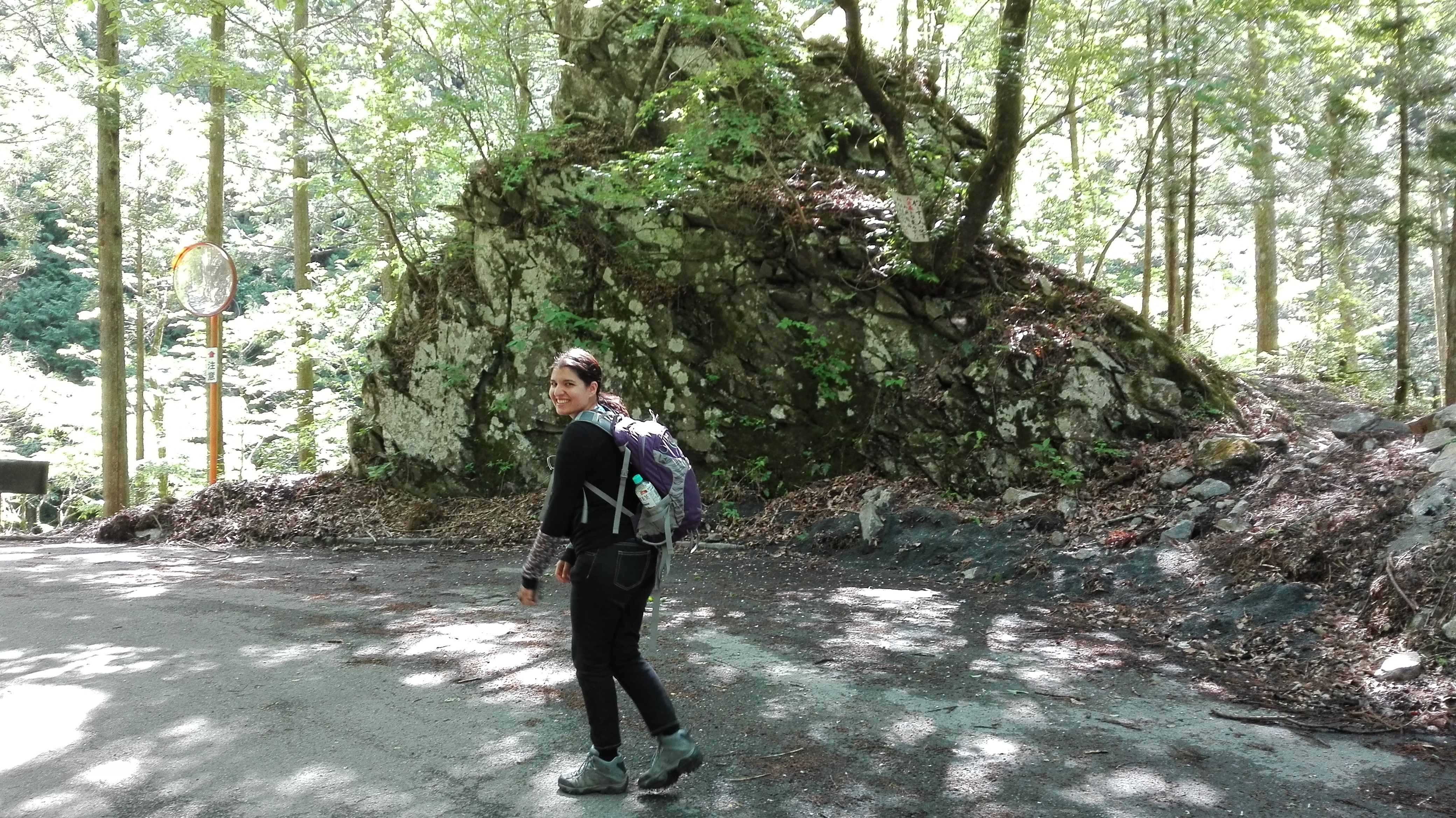
A few months ago, my flatmate Edith expressed interest in this hike as well, so the two of us tried the hike during Golden Week (the first week of May).

We filmed a vlog that it took me two months to get around to editing, which you can watch below.

For anyone interested in a more detailed itinerary, just scroll to underneath the video.

Getting There

We traveled to Okutama Station, which is all the way at the end of the Ome Line.

Generally speaking, the easiest way to get there is to take the Chuo Line to Tachikawa, then the Ome line to Ome, then the other Ome Line to Okutama. But on holidays, there’s a line called the Holiday Okutama Express that stops along the Chuo Line, so all you have to do is get to a station where it stops, and voila! You can get on a train all the way to Okutama in one go. The caveat is that this train splits along the way, so you have to be careful that you’re in a car that’s headed for Okutama.

Once you get to Okutama Station, there’s only 1 exit. You get to the exit, and you turn right without crossing the street—that’s where the #1 bus stop is.

Here you have to take the bus to Kawanori-bashi, or Kawanori Bridge.

(Note: be careful if you read kanji, because the mountain is usually written 川苔山 while the bridge is usually written 川乗橋.)

Normally, you’ll want to check the schedule in advance, because the buses don’t go more than once an hour.

But because we went in a high-demand time (i.e. Golden Week), there were special buses at the #1 bus stop that went specifically to Kawanori Bridge.

The bus stops right in front of the starting point for the hike.

In our case, we aimed to be on the Chuo Line by 6:30am; we started out a touch late, but still were on a train around 7. We reached Okutama, I believe, around 8:30-8:45.

Our Hiking Route

In terms of landmarks, this was our route:

Kawanori Bridge Bus Stop -> immediate detour just after the first big bridge -> Hyakuhiro Falls -> taking the right at the fork, so that we were on the southern loop toward the summit -> minor exploration on a ridge (not included in the video because there wasn’t much to see) -> Mt. Kawanori summit -> northwards from the summit to the major junction -> One-no-yama-no-kami (or, God of Mt. One; this is a brief flat area with a parking lot and a small shrine) -> Hatonosu Station.

The trails are extremely well-marked. We had some confusion just after we took the righthand turn to take that southern loop, when we seemed to come to another, unmarked junction. But it probably wasn’t a real junction at all, and we made the right call in which way to go. (It was to the right, again.)

We reached Kawanori Bridge around 9:15, but took a moment to have breakfast there, so we started hiking at 9:30. Including a 20-ish minute break at Hyakuhiro Falls and a few detours, we reached the summit around 13:30, where we took another 20-minute break. After that, we mostly walked continuously, though we did take a rest at One-no-yama-no-kami and again between there and the town where the hike ended. We reached Hatonosu Station around 16:30.

This is a map of our route. The hiking sites estimate that our hike was 13km long; however, we’ve since determined that the hiking sites only take into account horizontal distance and not vertical, so make of that what you will. The summit is just to the left of that last circle where the route heads basically straight south south east. As you can see, there’s a fair bit more distance to walk down than up.

As for elevation, this was our elevation map. Again, I’m a little dubious as to its accuracy. We seemed to experience more flats on our way down than this depicted, but maybe that’s also simply that we were fairly exhausted by the time we reached that point. (Note: the x-axis depicts distance traveled in km, and the y-axis elevation in m.)

Getting Back

Getting back is easy. The trains in Hatonosu Station are regular. Unless you’re out extremely late—which is inadvisable anyway—you should have no trouble getting a train back into town.

TIP: there’s a public hot spring bath at Kawabe Station, just after Ome on the way back into Tokyo. It’s geared towards hikers, and is a wonderful place to stop and refresh yourself after a long hike. They have several types of baths, indoors and outdoors, soap, shampoo and conditioner readily available, and two types of saunas. They also have massages and a restaurant. They have storage for large luggage, but usually the lockers are big enough to contain any backpack I take hiking. You can rent towels for a small extra fee, so all you really need to bring is a change of clothing.

Comments

This was a really fun hike! It’s supposed to be really nice in all seasons, so I might hike this mountain again.

Taking detours and breaks into consideration, I think we made pretty good time! We mostly just slowed down at the last segment of the downhill, where the hike finally started to get us in the legs.

The downhill was hard on our knees. We really slowed down on that last leg, and we were both walking a little funny in the end. But the hot springs helped with that quite a lot!

Edith was a bit dubious about the idea of planning another thing after such a big hike, but in the end she was really delighted with the hot springs!

So—really great hike, and a great day.

Footnote: if you’re wondering about the vlog/blog hybrid format of this post, I wrote another post about it here.

Share this page:

  • Print (Opens in new window) Print
  • Email a link to a friend (Opens in new window) Email
  • Share on Facebook (Opens in new window) Facebook
  • Share on X (Opens in new window) X
  • Share on Tumblr (Opens in new window) Tumblr
  • Share on WhatsApp (Opens in new window) WhatsApp
  • Share on Reddit (Opens in new window) Reddit
  • Share on Pinterest (Opens in new window) Pinterest
  • Share on LinkedIn (Opens in new window) LinkedIn
  • Share on Telegram (Opens in new window) Telegram

Like this:

Like Loading...

Of Vulnerability, Molehills and Mountains

Posted on May 10, 2018 by Kai Raine

As you may be aware if we are friends on Facebook, I am currently in a depressive episode.

This makes this a first for me: publicly talking about my depression while I’m still in the depths of it, dark and cold and frightened and exhausted.

Of Vulnerability

As I talked about in my post about social anxiety, this segment was not originally intended to be a self-help column. It was meant to promote understanding among those who want to better help their loved ones, and to provide encouragement for those in a similar state.

I like to present myself as together, responsible, strong, and reliable. But the truth is that there are times when I am none of those things. The truth is that virtually none of us are all those things all the time.

Depression means that there are times when it’s impossible for me to completely hide my soft underbelly from anyone. This leaves me, at those times, extremely vulnerable—to friends, family, colleagues and strangers alike.

It’s not even necessarily that anyone has to say something “wrong.” The thing that sends me falling further and further into the dark can be well-intentioned, and compassionate. Yet my mind, consumed by shadows whispering of self-loathing and hopelessness, might interpret that as an insult, or a slight—and there’s very little I can do to correct that, in the moment.

Conversations about depression are something of a taboo, or at least a very sensitive topic, in most societies. One of the reasons, in my belief, is because depression by its nature is a difficult thing to talk about for those of us who suffer from it. All it takes is one dismissal we can’t help but take to heart, one careless word from someone whose opinion shouldn’t even matter, and we’re sent careening out of orbit and further into the depths where everything becomes pointless and hopeless.

I was 17 or 18 when I was first able to admit to myself that this thing in my head was called depression. I mentioned it explicitly twice to two people over the next five years. Their responses horrified me and made me ashamed, and I clammed up again, slipping back into only vague references to the hopelessness in the presence of very close friends.

What did they do wrong, these two people in whom I confided?

Honestly? Nothing. On an objective level, there was nothing wrong with what they said.

The first was my father, who expressed relief and agreement with my self-assessment. I brought it up. I told him. He never told me, “Hey, I think you’re depressed.” He only agreed with my own assessment that I had experienced a severe depressive episode.

Bear in mind, this was not a subtle episode I’d experienced. I spent months increasingly unstable, and there was a stretch of a full 2 weeks spent literally hiding under my bed in my dorm room. I missed all my finals and tanked my GPA that semester, only managing to salvage those classes that allowed me to retake the final later. I was lucky to have a parent like my father, I know. Other parents might not have been able to see it for what it was, and blame me for my failure, nitpicking my lifestyle to find causation, and therefore fault in me. This is not a hypothetical: my mother did this. Her shame in me was palpable, and she blamed my eating habits (I’d gained quite a bit of weight during my freshman year of college).

By all accounts, my father’s understanding, his agreement with my assessment, should have been a haven. Instead, I behaved as if something grievously offensive had been said, and tried my hardest to keep our conversations away from that corner for years afterwards.

The second was a roommate of mine in grad school. I announced my “depressive tendencies” to her on our first day of meeting. I don’t know why I decided to do that: perhaps it was my way of turning over a new leaf. This roommate and I did not get along as a general rule, but with regards to this, she did the best that could be expected of anyone in such a situation. She accepted my statement; and weeks later, when I was explaining that I didn’t like exercising, she tried to delicately tell me that it might help my depression.

I hated being told what to do; I still do. It’s sheer arrogance, and it is more often a hinderance than not. This was no exception to that rule. I backtracked, informing her that I wasn’t really that depressive, I was just telling her the worst of myself early on so she wasn’t surprised. She called me weird and shrugged it off. I was left feeling shaken and small.

So, to reiterate: neither of these people did anything wrong. Yet I reacted as if they had. Why? What was I reacting to? What should they have done?

It was nothing about them, actually. It was that the admission aired one of my deepest vulnerabilities, and I was uncomfortable placing such trust in…anyone.

And yet I did nothing to help myself, for a long time.

Why? What was I waiting for?

Nothing. I was in denial, hoping it would go away. And at moments when I was forced to admit it to myself, I suppose I was waiting to be saved. I supposedly had all these friends and family who loved me—they’d save me, right? No. This is why one of my earliest posts was about saving yourself. No one knows your mind. My father tried to help. My roommate tried to help. I turned them both away, because their words weren’t the exact precise ones that I wanted to hear. Well, no one ever came up with that exact, precise combination. I learned to reach out and save myself.

Aside: A Day in the Life of a Depressive Episode

Now, I can talk about these things openly to the world not because I am less vulnerable, or because it will hurt me less when people deny parts of my mind that I know to be true, but because I have created a sense of self-worth and self-trust that I can believe in even when I can’t see it. Even when I feel like the stupidest, most worthless human to ever walk the earth, I can reach out past the noise to the stillness somewhere in me that assures me that, No. No, you know that this is the depression talking. We’ve been here before. It’s okay.

To be clear, it doesn’t feel like it does much. I could absolutely convince myself that this is accomplishing nothing, and a waste of precious energy.

The tiniest thing will still send me careening. Yesterday, I woke up at 6:30 as planned—and then stayed in bed until past 10, when I dragged myself up to start a load of laundry and get food. (Laundry was necessary because I had a flight the next day and no clean clothes.) My roommate and her SO emerged from the other room—they talked at me, and their words slid over me like I was underwater. I gave random responses and waited for it to end. Then I went back to my room and folded up my futon…and immediately lay back down on the floor and continued not to move. I forced myself up once more later to grab food, and periodically went into the kitchen for tea and water (but not nearly as often as I would have in normal circumstances).

It was near evening before I managed to get around to hanging the laundry—pointless anyway, I figured, since it was raining outside—a task I combined with grabbing dinner. All day, I was trying to tell myself that I really, absolutely, totally had to go to the lab while my brain kept up a buzz of, no no no no no people no no no no no they’ll hate me no no no no no.

As I’ve explained before, I don’t fight it. Fighting it, generally, makes it worse. I waited it out.

I waited all day. It was past 7pm that I felt a break in the panic in my mind. I seized it and went to the lab. I did the bare minimum I needed to do—the bare minimum, and I missed one little thing I was supposed to do.

By ordinary standards, this is abysmal. What a way to live, I would have berated myself in the past, pushing me further and further away from recovery.

I went to the lab, and ran a few other errands as well. I did the things I needed to do before I left (for the most part).

When I got home, I saw a text waiting. It was from an author whose book I’d promised to review a month ago, angry at me for having taken longer than promised (the promise was 3 weeks).

I did my best to be measured and calm in my response. I believe I succeeded.

It didn’t matter. I didn’t sleep until I passed out near 5am for a scant hour and 45 minutes, and the issue bugged me until it was resolved this morning.

Of Molehills and Mountains

As you will no doubt have noticed, nothing in my day was that big a deal. It was simply all in my head, looking at every anthill and molehill and seeing mountains the size of the Himalayas.

If you’ve never experienced this, perhaps it sounds trite. Perhaps it sounds like something that I should be able to correct. Perhaps it sounds more like a “way of thinking” than a “medical condition.”

Since I’ve started becoming more open about these aspects of my life, and perhaps even before that, I am often told the same thing: “You’re making life more difficult for yourself.”

The only thing less helpful than that is the dismissal, “You know, there are probably billions of people in the world who have it worse than you do.”

In the past, all either of these statements would do was compound the guilt, the self-loathing, the inability to accept myself. Now, I’ve so far been able to say, even from a depressed state, “Stop it, that’s not helping!” In a non-depressed state, I can usually smile and dismiss it.

The thing is, the molehills may still be molehills, but the lack of energy that makes them feel like mountains is very, very real. My parents used to encourage me to go exercise when they thought I was depressed. I think they thought it would be one of those things where you move, and you break through the energy-sucking thing and break out the other side. But it doesn’t work like that—at least, not for me.

The difference in my energy levels when I’m depressed and when I’m not is impossible to miss, for me.

In the past, exercising in a depressive phase felt like having an anxiety attack, which would trigger an actual anxiety attack, making everything that much worse. Now that I exercise regularly when not having an episode, that sort of occurrence has diminished; instead, I just feel weak and useless and exhausted. I’ve had to learn to forgive myself for making my workouts that much easier when I’m in a depressive episode. Moving is harder. Stamina is almost non-existent. If I lose focus, I just stop. There’s no such thing as a relaxing, easy exercise in a depressive episode. Every second is a struggle.

It can help. But mostly in the long run.

My point is this: the molehills don’t just look like mountains. They feel like mountains.

What Was Your Point in All This?

Depression tends to foster a sense of overwhelming shame of the self in me.

Society as a whole tends to shame depression, and the depressed.

These two tendency feed into each other in a disgusting, destructive fashion that’s not good for anyone. It’s a bad combo.

The only way to break this cycle, to even start making a difference, is to talk about it openly and say, This is how it is. There’s nothing to be ashamed of here.

Depression is nothing to be ashamed of. It’s okay. It can be treated. It can be lived with.

Great, So What are You Doing About That Depression Thing?

The moment I realized that I was in a depressive episode, I told the people around me—in detailed or vaguer terms, depending on their roles in my life—and they were all wonderful.

But I’ve learned that there are perils in relying too much on other people when you desperately need it. I ask for help here and there in little things, but the main things I take care of myself.

I’m stocked up with St John’s Wort tea. I’ve got pills in the mail. I found a psychiatrist that I’ll visit as soon as I have my insurance card. (I’m traveling in the meantime anyway, so it’s not the procrastination that might seem like.)

The bottom line is this: I have this core of self-trust, and an understanding of what the depression does to my mind. I know how past-me characterized myself, and I trust that she is a better judge than present-me. Using that, I can try to look at things a little more objectively, accepting that my current perspective is very skewed towards shame and self-blame. I can lean on that trust of past-me, and slowly, but surely pull myself out.

Share this page:

  • Print (Opens in new window) Print
  • Email a link to a friend (Opens in new window) Email
  • Share on Facebook (Opens in new window) Facebook
  • Share on X (Opens in new window) X
  • Share on Tumblr (Opens in new window) Tumblr
  • Share on WhatsApp (Opens in new window) WhatsApp
  • Share on Reddit (Opens in new window) Reddit
  • Share on Pinterest (Opens in new window) Pinterest
  • Share on LinkedIn (Opens in new window) LinkedIn
  • Share on Telegram (Opens in new window) Telegram

Like this:

Like Loading...

An Anatomy of a Social Anxiety Discussion

Posted on May 1, 2018May 1, 2018 by Kai Raine

Today, I’m going to write about social anxiety for both the socially anxious, and those whose loved ones may have social anxiety.

Prelude

When I first started this Keeping Ahead of the Shadows blog series, I had several areas in mind to write about, each tackling a different major aspect of life that is both difficult and that I have found ways to improve as a person with chronic depression and anxiety.

Unfortunately, the series rapidly became rather more preachy than my initial vision. It mostly consists of blog posts on things I do to combat depression. On one occasion, I’ve used it to complain about the way people define me. I’d only been doing it for a month or two before a friend of mine first called it my “self-help blog.”

But I never set out to create a self-help blog. I’m not here to tell anyone what to do. Yes, I’m a cognitive scientist—I understand neuroscience and basic heuristics. I probably have a slightly better understanding than the average person about how our minds work on a day-to-day basis. I am not a psychologist, or a psychiatrist. I’m just a person with depression and a slightly-above-average understanding of the human mind, trying to feel my way into a life that I can handle.

When I first conceived of this blog series, I had numerous subsections that I even outlined in the introductory post. In the year and few months that this blog series has existed, I’ve never addressed one of those categories at all.

So, let’s do that now. This is what I called it:

“A Social Life That Helps”

What does that even mean?

I could tell you what I meant at the time, and outline the things I planned to write about and never did.

I could—and yet I don’t see the point. Because there’s a reason I never talked about this.

Instead, I now articulate the undercurrent that made me want to talk about this in some way, shape or form: Social life is my heaven, and it is my hell.

Interactions with others is where I feel the effects of my broken, tired mind most acutely. It is where I feel the greatest despair, sorrow and hopelessness.

Yet interactions with others is also where I find my strength, and can see the beauty all around even in the darkest, coldest tunnel. It is where I can feel the greatest joy and happiness.

I can’t tell you if this is correlative rather than causal: if socialization is simply the medium through which I can feel what my mind currently holds, rather than the cause of these emotional ups and downs.

What I can tell you is that within the confines of my mind, the negative usually outweighs the positives.

From an objective standpoint, I’m pretty sure that most of the time, I enjoy people’s company, and enjoy talking and getting to know people in the moment. Yet that isn’t generally how it feels after it’s over. The moment a social interaction is over, I almost invariably sigh in relief and relax. The moment that I am in my own little world, my mind gets on its hamster wheel and clatters away. Sometimes, I focus on all the worst case scenarios and all the moments when I said the wrong things—until I’m convinced that I’m disliked, or that it may be fine for now, but everything is bound to go south eventually. Other times, I can distract myself, and prevent myself from dwelling on anything in particular…but it’s no use. Still I am left with a vague sense of doom at having to interact with these people again—I simply can no longer articulate why.

But that mostly applies to acquaintances. Interactions with close friends are a different beastie, with different hurdles and different ups and downs. These tend to be easier starting out, and are less likely to directly result in a roller coaster—but when the roller coasters hit, they can be far, far worse. Though the things I focus on may differ and the patterns may be less predictable, there is still a pattern of ups and downs. The highs from these interactions are more likely to last. Sometimes, there’s no noticeable drop from these interactions at all.

The intensity of these roller coasters varies. Sometimes, it can be subtle, a feeling so vague and undefined that I only see it upon reflection in hindsight. Other times, it can be intense, leaving me literally trembling and nauseous with terror at the notion of having to interact with people.

I have ways to mitigate these roller coasters in the interest of keeping up appearances, not going insane and just generally being able to function in society. And that was going to be the subject of this section.

Discussing a Discussion of Social Anxiety

Because social interactions seem to carry the greatest probability of destabilizing my mental state, it also feels the most frightening to talk about.

Certainly, as I mentioned earlier, there’s a discussion to be had about the cause and effect here. Is it really the social interaction that destabilizes me, or is the social interaction simply where I first become aware of the symptoms of my already destabilized mental state? If I had to guess, I’d say it’s probably a bit of both.

However, I’m not here to diagnose, or analyze cause and effect. I’m here to talk about my experiences.

Which brings me to the core of the difficulty of discussing this here. How do I discuss social anxiety, a subject that can so deeply affect me, in a way that will not lead to more difficult and anxiety-inducing social interactions? How do I discuss something that feels so inherently self-destructive in a way that is somehow constructive?

The answer to the first question, it would appear, is “carefully, and wordily.” The answer to the second is harder. My answer at this point is to ask myself another question: Whom am I looking to address with this section? The fellow socially anxious, members of the general public looking to learn more about social anxiety, or the loved ones of the socially anxious looking for a map?

I find that I’m only interested in deliberately attempting the first and the third. If there are people who fall into the second category who end up reading this and find it helpful or informative or interesting…well, of course, that would be a pleasant surprise. Emphasis on the surprise. Not because I don’t want to engage those who have no experience with this subject, but because I feel I’m too close to it to be able to give an explanation that would be truly meaningful to those who have no experience with the subject themselves.

However, let that be your judgement to make.

A Brief Overview of How I Deal With Social Anxiety

Social anxiety, to me, is a matter of mindset. I don’t mean it’s easy, or that it’s under my control. I can’t control it, and I don’t try to—much as I have discussed previously with regards to depression, trying to wrestle these tendencies and bend them to my will can only make them worse. Instead, I accept them—but try to keep them from completely taking over.

I liken it to there being two components of thought in my head: the cool-headed and rational part, and the emotional part that can get overwhelmed by anything intense—self-consciousness, guilt, fear and even love. Both of these components are necessary for me to lead a healthy life. This isn’t about cutting out the emotional part, but rather about balancing it with the rational part.

On occasions when I need to do something or go somewhere and social anxiety is the thing holding me back, I try to ask myself, “What am I afraid of?” Most of the time, I don’t have a clear answer. But that act of asking the question helps the rational brain gain just a little bit of foothold.

Am I afraid of people judging me and disliking me? If so, why? Usually, if there is an answer to these questions, the answer is not as damning as it initially feels, when inspected more closely (but not so closely that I overthink it and send myself down another anxiety spiral).

Am I afraid of repeating past failures? Guilt and fear combined can become a crippling force. Here, I must forgive myself—repeatedly. I try to remind myself of what I have learned through my past failures, and trust that I will not repeat them.

Isolation is very comfortable, to me—at times it can become too comfortable, so that leaving my comfortable isolation becomes an increasingly daunting prospect. As a general rule, I try to gauge my own needs against my wants. Do I need isolation, or do I just want it because I’m anxious of people?

There’s nothing wrong with isolation, but it must not become a self-imposed fear-enclosed cage. It’s a tightrope walk between the exhaustion that is socialization and the fear that comes with too much isolation.

Most crucial of all, when I feel it is necessary (or even just helpful), I ask friends to help me by telling me to go wherever or do whatever it is that I’m anxious about. I’m selective about who I ask to help with this: if a friend refuses, or takes this as an invitation to push me unprompted at other times, it can backfire and end up shoving me further into my shell instead. But with the right friend, a push where I needed it can make that crucial difference.

Crossing the Line Out of Anxiety

Walking through anxiety can be like pushing through molasses, with the thought “I could just turn back and find an excuse not to do this” never far from my mind. The physical distance that I have to push through this anxiety can be very short. At present, it’s never more than ten meters.

There’s usually an invisible line somewhere, in a physical location: a line where, if I cross it, the anxiety snaps away and leaves me clear-headed and alright. Usually, for me at present, this line is just outside my room or my front door—sometimes even just inside the front door. This hasn’t always been the case. In high school, the line was at the entrance to my classroom. My ride to school was always torturous: a solid half hour to an hour spent begging the universe and providence and any deity who might be listening to please spare me from this coming day with a riot or a strike or anything at all.

Yet regardless of how long or short the distance is, the struggle is no less difficult.

So, sometimes I focus only on that release. Sometimes I don’t think past that front door—I just tell myself that I’m moving one step at a time—and then I can do it. It’s astonishingly easy. I pass the line, and I can leave as if there was never any difficulty at all.

And then the fear is gone—for a time.

Helping a Loved One With Social Anxiety

Now, most everything I’ve talked about so far has been about how isolation must not last and how the fear of socialization should not take over—but this is how I would speak to a person who has or understands social anxiety. If you are not familiar with it, perhaps you wonder why I don’t simply keep myself around people until I am free of the fear.

This is because to me, socialization is inherently exhausting. There are too many stimuli: the noise, the people, the verbal and nonverbal cues, the expected actions and reactions…it wears me down. I feel exhausted after a few hours of dealing with people, but due to the nature of our society, I cannot simply slink back home. I must keep going, keep pushing, keep it up until whatever I am doing is done.

Personally, I have a lot of ways that I help myself deal with this. I usually carry a book on my person to be sure that I have a world to sink into, just in case I cannot leave but I need to pull my brain out of the fray for a moment. I live with a friend that I love and trust implicitly, who can understand this sort of difficulty in me and respect my boundaries as I set them, because I know that this keeps me from sinking as completely into isolation as I might if I were on my own—not a thing that I need all the time, but a thing that I believe is extremely helpful to me for the time being.

So, as you can see, for my own part, if I need something to help me, I can ask for it. I can ask a friend to argue with me to get me to go to a place where I don’t want to go. I can ask my flatmate to leave me alone for a few days. I can guiltlessly send a text to say that I will be late to a social gathering, allowing myself the time to collect my mind and pull myself together if I’m not able to do so in as timely a fashion as I would wish. At times—desperate times—I can even lock myself in a bathroom or some such thing to gain isolation if I really feel I need it.

This is why, if you have a loved one with social anxiety, the biggest piece of advice I can give you is to listen. Just because we have social anxiety, just because there are shadows and ghosts in our minds that do not exist in reality, does not mean that we don’t understand what we need.

To many who cannot see the shadows and ghosts, there appears to be a simple solution: just do it. Just go there. Just pull yourself together. But just because the shadows and ghosts are not real does not mean that we can simply act as though we do not see them. They feel real, and that’s all that matters, sometimes.

Depending on the person, depending on your relationship, perhaps there are instances where your loved one might thank you for pushing them when they didn’t ask you to, or pulling them out to do something against their protests.

All I can tell you is that for me, those measures are entirely counter productive. For me, the ghosts and shadows only are dispelled when I take that step out the door of my own volition. If I’m dragged, or feel forced or pressured into going somewhere, my shadows and ghosts come with me. I curl up tighter in my mind, hugging the ghosts ever closer. It becomes that much harder to break free.

But this was also not always the case. As a young child, I hated going out to social events; but my parents knew well that they only had to persuade me out the door, and however sullen I might start out, I would likely end up having fun. As I grew older, however, this ceased to be the case. Enjoyment was slow and rare to come to me if I felt forced to go somewhere, even if the intentions of the family member were good.

So, this is why I say—please listen to your loved one. And continue to listen. Just because you’ve found a formula that does work, that has worked for awhile, don’t stop listening when it no longer does.

Conclusion

There’s a lot to say on the topic of social anxiety—as a person with it, as a person used to talking to people with it.

This barely scratches the surface, but it touches a topic that is desperately difficult for me to discuss in a way that I hope was somewhat rounded, and hopefully helpful to someone, somewhere.

And now—I shake off my shadows and ghosts, and go out my door.

Share this page:

  • Print (Opens in new window) Print
  • Email a link to a friend (Opens in new window) Email
  • Share on Facebook (Opens in new window) Facebook
  • Share on X (Opens in new window) X
  • Share on Tumblr (Opens in new window) Tumblr
  • Share on WhatsApp (Opens in new window) WhatsApp
  • Share on Reddit (Opens in new window) Reddit
  • Share on Pinterest (Opens in new window) Pinterest
  • Share on LinkedIn (Opens in new window) LinkedIn
  • Share on Telegram (Opens in new window) Telegram

Like this:

Like Loading...

Trapped in My Mind: Big Picture, Little Picture

Posted on February 24, 2018February 24, 2018 by Kai Raine

I’ve always felt a little bit trapped in my own mind. It frustrates me endlessly that while I can flip a switch in my brain to understand  any perspective, I can only view one perspective in depth at a time. Generally, since I must be at least a little biased, I let my bias be in favor of my own perspective.

I’m also a fan of character-driven stories. Even if a story is genre fiction, it’s the characters that I hone in on—their ups and downs and the way that they think and perceive and learn and grow.

What this means, in essence, is that my reading niche is a place where stories have fleshed out characters with all the little details to show me who they are and who they are becoming, but also allow for a sense of the bigger picture.

In the final stages of editing/rewriting These Lies That Live Between Us, I was watching and reading a lot (and I do mean a lot) of One Piece. In a mindset where I was finding it hard to focus on—much less enjoy—any other author’s creations, One Piece simply clicked, as it always has since I first discovered it at age ten.

I analyzed this, and recalled the way that my attitude changed with regards to TLTLBU in the many different forms that it has taken over the years.

In my first post-publication review of TLTLBU, I received a positive review (not posted publicly) that contained the following feedback:

I had a hard time trying to follow the story line in a few places because there were too many characters. Fewer side characters would help and more development of the main characters to get to know them better.

Honestly, I’m surprised I didn’t get more feedback like this. There’s a lot going on in TLTLBU, and a lot that is left unstated—merely implied, or left out of the text altogether. Notably, that Nicki’s storyline is told entirely from other characters’ POVs, with the only character used more than once being Dara—I knew that I risked alienating some of my audience by doing this.

I did it anyway because it felt right. To me, Nicki’s story is much more fun when you the reader don’t know what she knows or is planning. It’s thrilling and intriguing in a way that mounts and climaxes toward the end, in a traditional and time-tried fashion. In contrast, if I were to tell that same storyline from Nicki’s perspective, the tension would be highest when her father throws her in the tower. After that point, even though she is caught off guard a few times, things generally go her way—which is great for Nicki, but not very exciting to read if we’re in her head.

I did consider telling that whole storyline from one other person’s perspective—Manon, perhaps, or Odilon or Hervé or even Enri—but I didn’t feel that was right. Making any of these characters the primary POV for that story would have conflated their role in the story. If I did that, then in later books, when I begin to use Nicki’s POV, I would have to create an all-new storyline for the former POV character so that he or she didn’t simply fall out of the role of protagonist.

I could have done it, certainly. But What Words Have Torn Apart is, at its core, about the three sisters. If you’re wondering why, then, Alderic was permitted the role of protagonist: his role as a member of the king’s guard means that his storyline, unless he deserts, will always run parallel with the Ceryllan royal family. After the events of TLTLBU, his storyline is even more entangled with the sisters’. This is why I could comfortably make him a protagonist when needed.

There were a lot of things I could have done. I could have cut the distracting detail about how nobility doesn’t use contractions (though they occasionally do), and the common folk do use contractions (though they occasionally don’t). But I didn’t, because I like doing something that starts out feeling ever so slightly off before you realize that oh, this is just how this world is. (Although, let me say, if I’d known I was going to do an audiobook, I probably would have edited this out. It was a nightmare to try to do in voice, and will probably sound even more unnatural as I try to make it work.)

I could have avoided mentioning the inner workings of the royal council, and Nicki’s as-yet-undefined title of Shadow, until it became relevant in the third book. But I didn’t, because I prefer the world that shows you that there is something going on before it is relevant (at which point it will be explained) over the type that surprises you with new titles and roles that the characters had all along that never got mentioned until it was relevant to the story.

What I am illustrating is that all of these choices were made, knowingly and consciously, with only myself as an audience in mind. Does this sound like a terrible decision? It probably would have sounded like it, to me, at one point in the past.

But this is where I must come back to One Piece.

One Piece has a question and answer column between chapters that began in about volume 4. At some point, the author explained that he has this rule: when he writes a chapter, he rereads it and asks himself, “Would I have enjoyed this as a boy?” to which the answer must be yes. If the answer is no, he tosses it and starts again.

One Piece is remarkable in many ways, but one of the most notable is the continuity. As the story goes on, we learn more about the pasts of various protagonists as well as the world itself, answering questions that we never thought to ask. Sometimes, the set-up is hundreds of chapters before the payoff—over a decade in real world time, in some cases. Most authors writing this way would inevitably create a few plotholes that had to be dismissed by handwaving.

Yet somehow, One Piece has avoided that pitfall. It also has, for the most part, avoided repetition. (Though in recent story arcs this may be up for debate. If you feel that Dressrosa=Alabasta, Whole Cake Island Arc=Enies Lobby Arc, or Sabo=Ace, DO NOT POST IN THE COMMENTS! I’d be happy to have that discussion, but please use the contact form to avoid spoilers in the comments.)

As to how the story has managed twenty years without plotholes, and only three major claims to repetition? I believe it lies in the author’s method of making sure that the story appeals to himself.

This means that he can comfortably go back and reread his own story from time to time—no small endeavor—and still catch any details that might be relevant. Yes, he has a notoriously enormous number of notebooks filled with notes—but notes alone can’t keep you from accidental plotholes. There must be rereads, especially where histories are being inserted beneath something or someone that we readers already know.

And so—I geared my book toward myself. Not my teenage self, who I think would probably have preferred a much more clear-cut story with a clearer sense of who to root for, and a more traditional romance—but my present self.

I expect that there will be more readers out there who will take issue with the way I’ve chosen to do things. I expect to receive at least a few negative reviews that take issue with any of the issues discussed above, and/or a few others—the ease with which I kill characters and animals despite this being a YA novel, for instance.

But in creating a final draft for myself, I also inadvertently stumbled upon something that has become valuable to me as an indie author: I don’t take negative criticism personally. Because the final version of this book was written with a reader like myself in mind, I’m well aware that not everyone will like it, and I accept that. I hope that TLTLBU will find many people who enjoy and love it half as much as I do, but I understand that it won’t be so for everyone.

Since publishing my book, I’ve started taking a lot of the criticism of it a lot less personally. I acknowledge and accept it, but a reader missing what I was going for, or informing me that it was a difficult book to get into, doesn’t bother me as it once did. Ever since this last round of edits (if you want to know whether you have the final version, check chapter 39: if it was written by Stelle, then it’s the old version; if it was written by Deric, it’s the new version), I don’t fall into the well of wishing I could make changes anymore.

It is, at last, as complete as I could make it. (Though I have no doubt that there will come a day—in a month or a year or a decade—when I will idly wish I could go back and refine it.)

I believe that, in trying to fix all the little-picture problems in the details, and tailoring the book to my own preferences, I stumbled across a pre-emptive solution to a big-picture problem that I’d never noticed: as long as I’m writing first and foremost for myself, readers’ opinions—while valuable—no longer feel like judgements. They are more of an acknowledgement that some people understand and enjoy this story with me—which is delightful beyond words—and that some people don’t—which is disappointing, but not cutting. This is particularly important, I realize now, as an indie author, because when you lose confidence in yourself and your book, there’s no one there to assure you that your book really is as good as you think it is. There’s no agent or publisher whose existence alone can assure you that, at the very least, someone experienced thought your book stood out among thousands of others. There’s only you, and your own self-assurance and love for your book.

As an aside, I’d like to say that I don’t mean any writer should ignore criticism. I always aim to question myself and my assumptions, and if someone comes up with some criticism I’d never thought of, I will give it all due consideration. But at the end of the day, I find that it’s important to be critical of the criticism. No book has ever pleased everyone, and if I rewrote my manuscript to try to please every person’s criticism, it would never be finished—and I would never be happy, because I would be writing toward a non-existent sense of universal acceptance. So yes—I read and acknowledge and consider and value every reader’s criticism. But at the end of the day, it doesn’t diminish my delight in my story, or my love for this book that is my firstborn child.

Perhaps this was obvious to other writers and I’m a late arrival to the party. It was a valuable piece of growth to me all the same.

So, I’d like to announce a the start of new blog series! I’m going to start talking a little about my journey into indie authorship. I know there are a lot of blogs out there that talk about it, but I thought that perhaps my experiences and insights as someone who dove into this world headfirst, knowing nothing, might be valuable to someone out there.


I started a mailing list! Please subscribe below. You’ll only receive notifications about the thing(s) you asked for—no spam, I promise! Plus, you’ll get access to Nevena’s Silence, a prequel to TLTLBU.

Share this page:

  • Print (Opens in new window) Print
  • Email a link to a friend (Opens in new window) Email
  • Share on Facebook (Opens in new window) Facebook
  • Share on X (Opens in new window) X
  • Share on Tumblr (Opens in new window) Tumblr
  • Share on WhatsApp (Opens in new window) WhatsApp
  • Share on Reddit (Opens in new window) Reddit
  • Share on Pinterest (Opens in new window) Pinterest
  • Share on LinkedIn (Opens in new window) LinkedIn
  • Share on Telegram (Opens in new window) Telegram

Like this:

Like Loading...

Why WANTING to Exercise is Necessary (For Me)

Posted on January 14, 2018 by Kai Raine

As you may know from interacting with me or from earlier posts, I am not an athletic person, and generally have had trouble keeping up an exercise routine. Sometimes, I can mitigate this by having an “easy fallback exercise,” but not always. I often grow bored, or I have “more urgent things to do,” or I “just don’t feel like it.”

I simply accept those feelings. At the end of the day, there is only one reason why I exercise: because I want to.

If this sounds unsustainable, I agree—at one time, it would have been. I had to learn that every other reason to exercise simply didn’t work for me, then learn to accept that there was a want to exercise that I’d been smothering before. For me, the key was digging out that want and learning to identify and acknowledge it.

Routine

Routine is often cited as something that can help people break out of depression, and I know people who find that helpful. If that helps you, then great! I’m not one such person. The process of creating a routine can help me, and make me feel energetic and engaged.

But the moment that routine is established and I no longer have to think about it, I slip back into depression frighteningly rapidly. I grow disengaged and apathetic, not only with regards to the exercise and other routines, but with regards to everything.

Some of my worst slides into a depressive episode have occurred because I was leaning too heavily on a routine.

There are More Urgent Things to Do

Of course, exercise is as much a priority as food, and I try to treat it as such. However, when I’m facing some deadline, or swamped with work that I just want to power through, there are times when it’s completely unhelpful to try to back out of that to do exercise.

If I feel the urge, it’s something I try to seize upon. But in the absence of that urge, again, I’ve found that forcing myself away from the seemingly “more urgent” work into exercise doesn’t accomplish much. This generally leaves me a little more tired and annoyed than before.


Not Feeling Like Exercising

Sometimes, for no particular reason—or for paper-thin reasons that feel super important even though I logically know they shouldn’t be—I just don’t feel like exercising. This is grayer ground than the previous two instances. Obviously, it would be ideal if I could create a system: “Oh well, I’ve exercised X many times this week, I guess I don’t have to today” or “Well, I don’t want to, but I’ve only exercised X many times this week so I should do it anyway.”

But that comes too close to a routine, for me. So I play it by ear. This means that there are times when I don’t exercise for weeks at a time.

And that’s okay. I try to keep the no-exercise stretches from becoming too long, but I also don’t try to force myself if I’m struggling to find the will.

If I’m having trouble breaking out of this headspace, it helps me to have a workout buddy (whether in person or remotely) to ensure that the exercise doesn’t completely fall off my list of priorities.

But if I feel too swamped to exercise properly for a week or two, I don’t let myself feel guilty about it. That guilt can become an unshakable tumor that makes it increasingly difficult to find the want to exercise at all. So I see keeping up regular exercise as desirable, but ultimately not worth stressing about.

What is Wanting to Exercise?

For me, it took years to find that nugget of wanting to exercise, and to learn to listen to it.

It’s not like craving a food or a book I love. It’s an ache in my muscles that comes up when they haven’t been stretched sufficiently in awhile; or a heaviness that I feel in my body. Oddly, I’ve found that if I exercise less, I crave sugar more; and as I eat more sugar, I feel heavier and more tired. One round of exercise in the middle of such a cycle can leave me feeling amazingly refreshed and happier than I’ve felt in days or weeks.

In a way, this want is a retroactive one: a thing I don’t necessarily feel so strongly before I exercise, but the moment I do something to break through a behavioral cycle that wasn’t helping me, I feel such joy and relaxation that I’ve come to expect that. And that expectation feeds into the wanting to exercise.

What Do I Do When I Don’t Feel the Want at All?

All of this said, I usually don’t let myself do no exercise at all for weeks on end. Usually, even if I can’t find the urge to exercise properly, I can find the will to do ten minutes of yoga, or five to ten minutes of ab exercises, or maybe even just sixty seconds of planking.

This might not seem like much, but it keeps me from falling completely into a rut that I’d have to struggle to get out of. It keeps my muscles engaged just enough that when I want to go on a proper jog or do a proper round of yoga, my body isn’t that shocked.

This is a series about how I deal with chronic depression through life management. Please click here for more about why I do this series.

Share this page:

  • Print (Opens in new window) Print
  • Email a link to a friend (Opens in new window) Email
  • Share on Facebook (Opens in new window) Facebook
  • Share on X (Opens in new window) X
  • Share on Tumblr (Opens in new window) Tumblr
  • Share on WhatsApp (Opens in new window) WhatsApp
  • Share on Reddit (Opens in new window) Reddit
  • Share on Pinterest (Opens in new window) Pinterest
  • Share on LinkedIn (Opens in new window) LinkedIn
  • Share on Telegram (Opens in new window) Telegram

Like this:

Like Loading...

7 Ways to Maximize Misery, by CGP Grey

Posted on June 9, 2017June 9, 2017 by Kai Raine

Some of you may already know that I’m extremely fond of CGP Grey and his informational YouTube videos. Well, last week, he posted a video that essentially summarizes what I’ve been trying to do with this blog series.

I want to emphasize that I don’t view this as a don’t-do-this-ever list. For those of us that are part of the tech-in-our-pockets generation, it is inevitable that we do or have been part of at least a few of these habits. If you’re anything like me, then being told one-sidedly “Don’t ever do this” feels annoying, narrow-minded, and unhelpful in the extreme.

So I’m sharing this not as instructions, but as a self-awareness session. Whether or not we follow the advice, I think it’s useful to know how these things affect us. For instance, I understand the value of a regular sleep schedule, and not sleeping right after staring at a screen; however, there are times when I’ve been writing all day and I’m on a roll, so I write until I have to sleep, and then wake up, grab coffee, and go straight back to the screen. In these cases, I understand the effect this might have on my psyche, but I also prioritize my writing.

I sent this video to a friend and he sent me back a frowny face: he felt like the video was highlighting everything he was doing wrong in life. So I want to emphasize that this should not make you feel bad. It doesn’t have to affect the way you live, if you don’t want it to. But I believe we should all know the effect our habits may have on our psyches, and the rest of our lives.

Share this page:

  • Print (Opens in new window) Print
  • Email a link to a friend (Opens in new window) Email
  • Share on Facebook (Opens in new window) Facebook
  • Share on X (Opens in new window) X
  • Share on Tumblr (Opens in new window) Tumblr
  • Share on WhatsApp (Opens in new window) WhatsApp
  • Share on Reddit (Opens in new window) Reddit
  • Share on Pinterest (Opens in new window) Pinterest
  • Share on LinkedIn (Opens in new window) LinkedIn
  • Share on Telegram (Opens in new window) Telegram

Like this:

Like Loading...

There is Always a Solution

Posted on May 27, 2017 by Kai Raine

One of the traps of depression is the way it can at times obfuscate what should be obvious. This is why I sometimes need to remind myself that no matter how drained I’ve been for however long, no matter how difficult it is to get through life from day to day, there is always a solution.

Always.

It could be exercise, better eating habits, socialization, alone time, time spent in nature, or simply a change in pace. It could also be a psychiatrist, medication or even an invasive procedure like deep brain stimulation.

I don’t keep this blog series to promote the idea that attempting to combat depression without therapy or medication is somehow better. I want to address a sense of helplessness that I often feel, and that neither therapy nor medication can necessarily help. The helplessness can also take over when psychiatry and medicine are out of reach, whether the reasons are geographical, financial, social or of any other kind. I cannot provide therapy nor medication, but I can suggest alternatives.

There is joy still, and an easier daily life. There is still a corridor to access it. These are never gone. It is harder: the corridor is blocked, whether by fog or a rockfall. It will take effort, but it will also take strategy.

This blog series is meant to be a compilations of strategies that I have found to work, in the hope that I will enrich others’ arsenals when needed.

But the first and foremost thing to keep in mind is this: there is always an answer, always a solution, always a strategy. If hopelessness takes over completely, there will be no saving yourself thereafter. So if giving in to despair for awhile is necessary to you, then go ahead–but never completely relinquish that lifeline that is hope and the knowledge that there is a way to rescue yourself somewhere. It is only a matter of figuring out how.

Share this page:

  • Print (Opens in new window) Print
  • Email a link to a friend (Opens in new window) Email
  • Share on Facebook (Opens in new window) Facebook
  • Share on X (Opens in new window) X
  • Share on Tumblr (Opens in new window) Tumblr
  • Share on WhatsApp (Opens in new window) WhatsApp
  • Share on Reddit (Opens in new window) Reddit
  • Share on Pinterest (Opens in new window) Pinterest
  • Share on LinkedIn (Opens in new window) LinkedIn
  • Share on Telegram (Opens in new window) Telegram

Like this:

Like Loading...
  • 1
  • 2
  • 3
  • Next

Recent Posts

  • Redefining “Which Quarantine House” Memes
  • The TLTLBU Sequel Woes
  • The World Wide Web (No, the Other One)
  • Hello, Blog Readers…
  • A Quick Guide for Writing Diverse Characters (Whose Backgrounds You Don’t Share)

Recent Comments

  • Cliftonguest on Route 2: The Highway That Was My Personal Obstacle Course
  • Kai Raine on Mt. Kawanori Hike (Including Hyakuhiro Falls)
  • Edith on Mt. Kawanori Hike (Including Hyakuhiro Falls)
  • Kai Raine on Mt. Kawanori Hike (Including Hyakuhiro Falls)
  • Onlinepharmacycanada on Mt. Kawanori Hike (Including Hyakuhiro Falls)

Archives

  • April 2020
  • February 2020
  • April 2019
  • December 2018
  • November 2018
  • October 2018
  • September 2018
  • August 2018
  • July 2018
  • May 2018
  • April 2018
  • March 2018
  • February 2018
  • January 2018
  • August 2017
  • June 2017
  • May 2017
  • April 2017
  • March 2017
  • February 2017

Categories

  • Cognitive Science for Writers
  • Eating and Cooking
  • Hiking and Nature
  • Indie Publishing & Marketing
  • Interesting Strangers
  • Keeping Ahead of the Shadows
  • Murphy's Law of Transportation
  • Stories and Me
  • The Othered
  • Travel Stories
  • Writing for a Globalized Audience

Meta

  • Log in
  • Entries feed
  • Comments feed
  • WordPress.org
© 2026 Kai Raine | Powered by Minimalist Blog WordPress Theme
%d